Beautiful but Bossy! Japanese Anemones and the Art of Editing a Garden
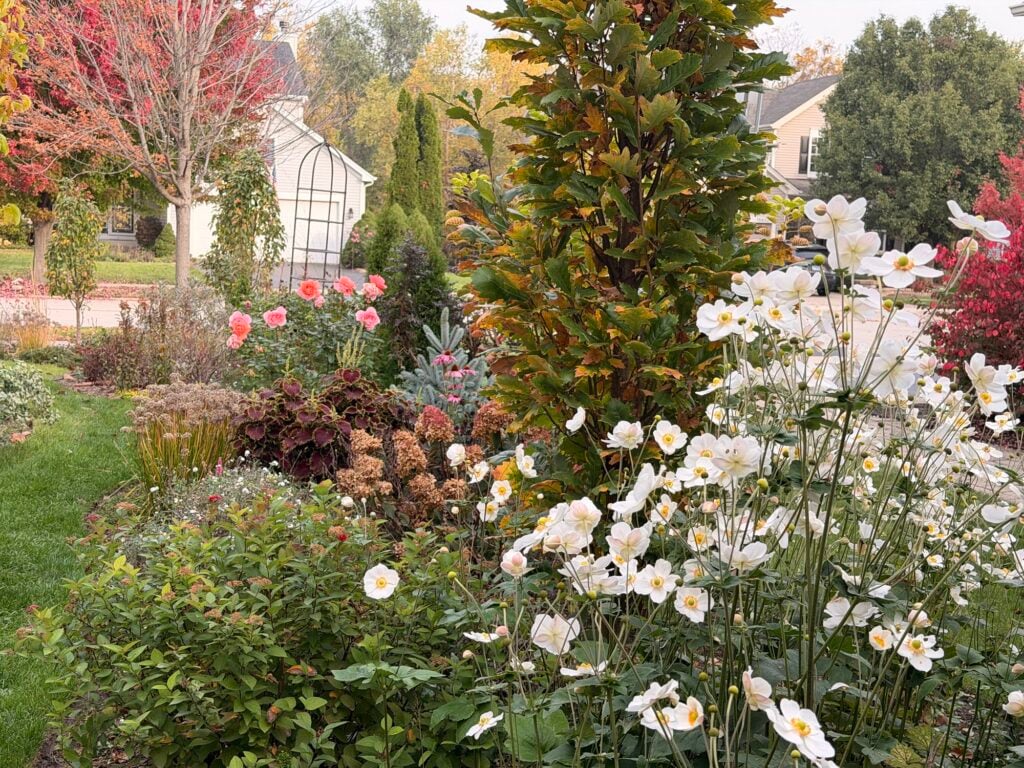
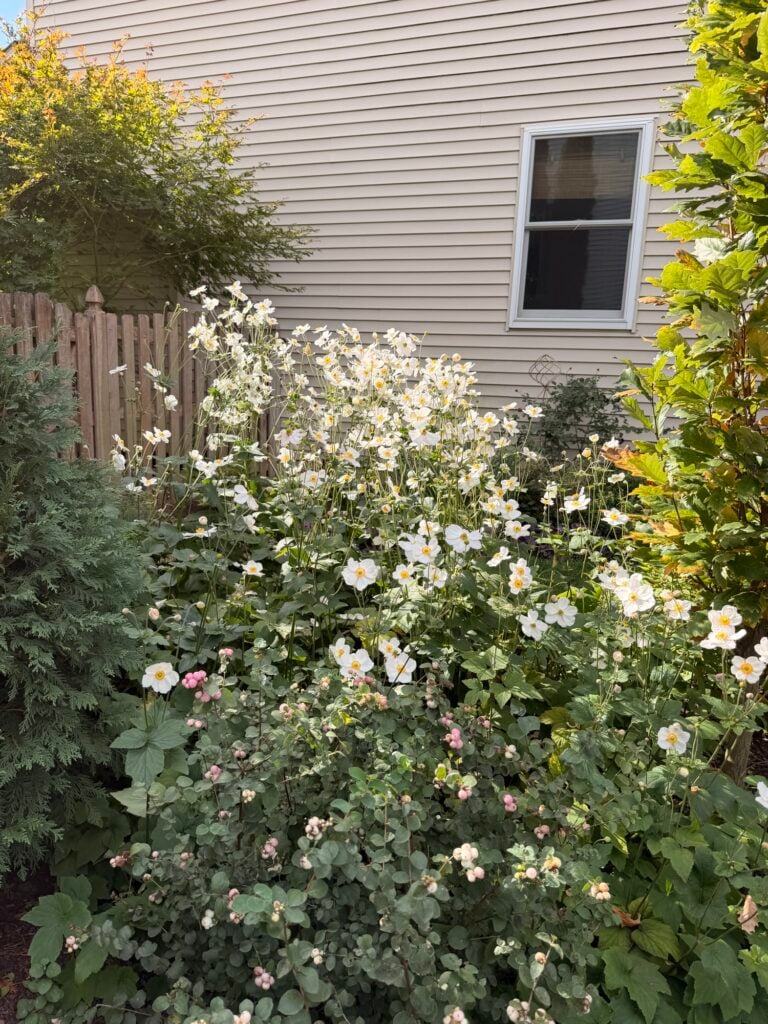
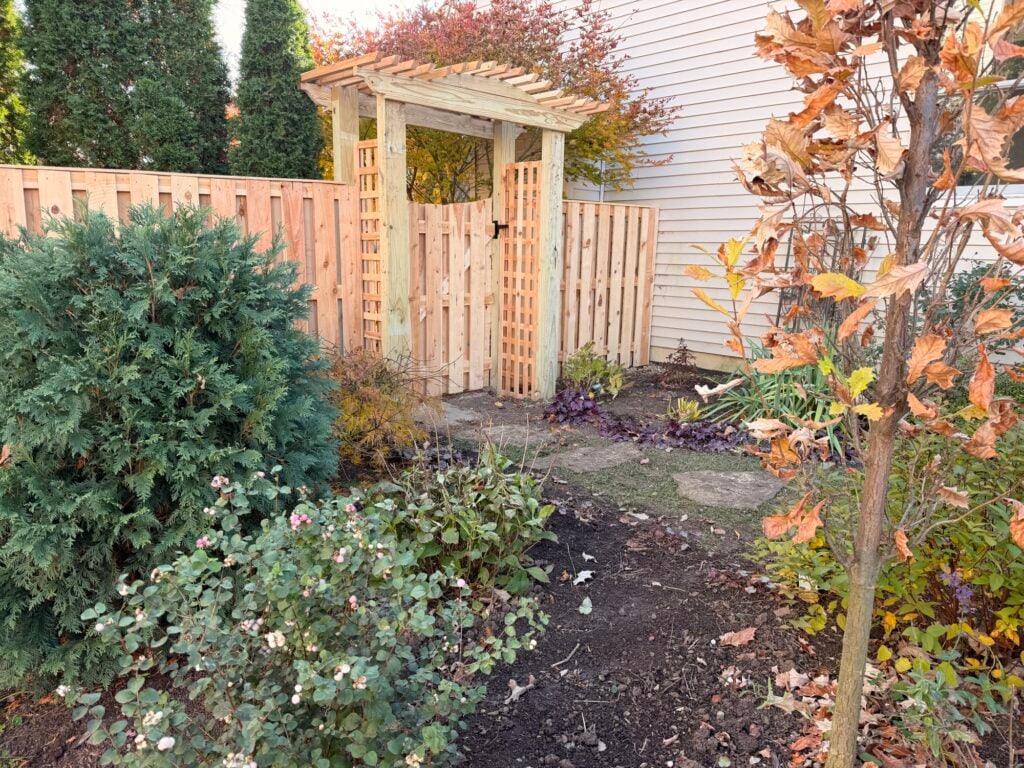
Sometimes editing a garden means letting go of something we love to make room for something else to be appreciated. That was the case this year, although, truthfully, it had been coming for several years. My Honorine Jobert Japanese anemone, while beautiful and graceful, became a little too enthusiastic about its growing habits. It was gradually swallowing up and obscuring the soft-spoken beauty of my Viridis laceleaf Japanese maple.
Could they coexist? They did for several years. But eventually, the balance shifted and I realized it was time to take charge.
I spend so much time thinking about my garden — combinations to plant, how they’ll meld together, what they’ll look like from season to season. But the edit is often the most important part. And for me, the most difficult. It’s only when we finally plant and give things a chance to grow that we can really see and ask ourselves is this what I envisioned? Sometimes it is, sometimes it’s even better and sometimes it’s not. That’s where the edit comes in.
Autumn 2026 was Honorine Jobert’s swan song. I love her, but it’s time.
The growth habits of Honorine Jobert Japanese anemone were difficult to ignore. I loved her late-season color and the movement she brought to the garden, but her eagerness was overbearing. Lost among that beautiful stand of dancing white blossoms were a Viridis Japanese maple and a mountain hydrangea (whose cultivar name I’ve forgotten). Both deserve a little breathing room.
I’ve always appreciated the wisdom of the late Christopher Lloyd, whose writing reminds me that a garden isn’t something we simply plant and walk away from. It needs our attention, an occasional reassessment and sometimes a rather decisive hand.
“Take stock, now and again; don’t just drift in giving up large areas to plants you’re no longer really fond of at all. Deaths can be imposed as well as waited for. You can’t always rely on Dame Nature to look your way at the right moment.” Christopher Lloyd in The Adventurous Gardener
Reading his words again gave me a sense of agency. Editing is a hard thing for me. But sometimes making a garden better means letting go of something we love. And let’s face it, an act of God is unlikely to break the spirit of Honorine Jobert.
Understanding Japanese Anemone Growing Habits
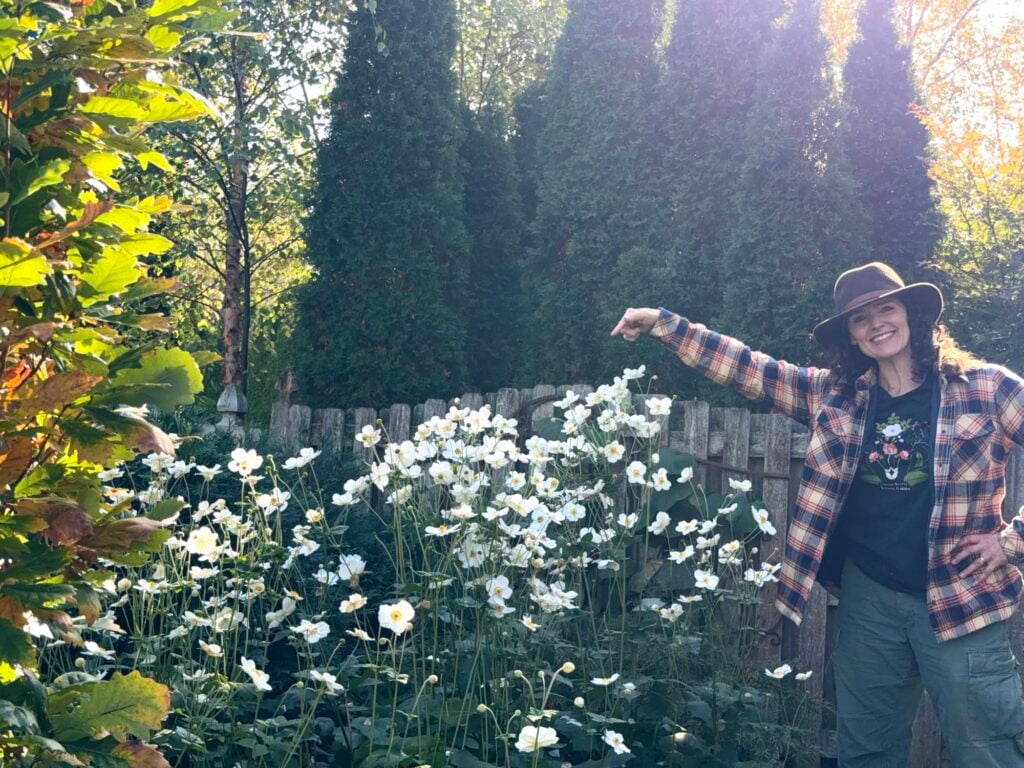
Japanese anemones spread by creeping underground rhizomes. I started with three plants in 2021 and for a few years they stayed put, until a few years ago. My three little plants turned into a full-blown patch! And then they swallowed everything around them in the most beautiful way. Don’t get me wrong, Honorine Jobert is in no way a bad plant. As a matter of fact, she was elected the 2016 Perennial Plant of the Year by the Perennial Plant Association. She has her merits and that’s what makes the edit so difficult, but necessary.
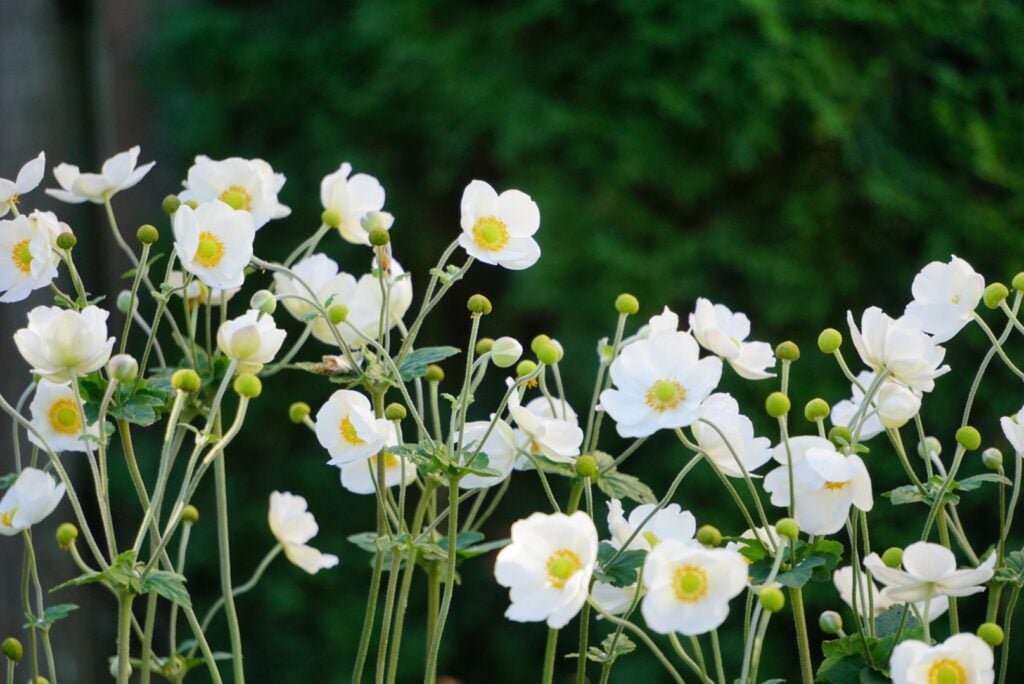
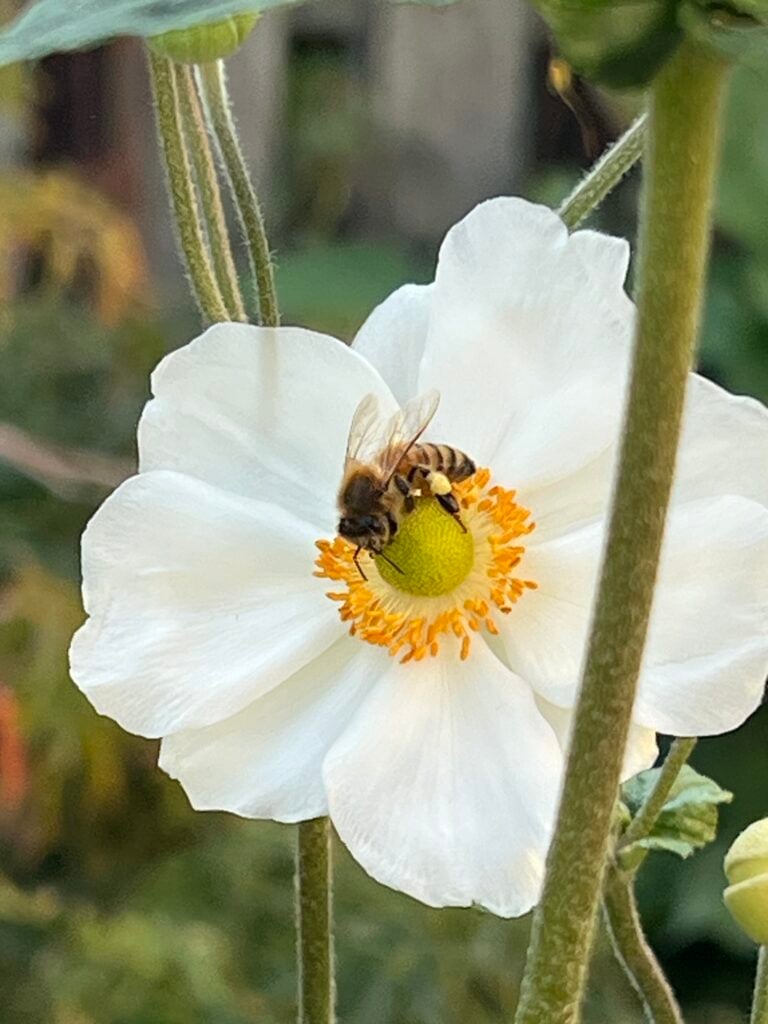
I live on a suburban lot with a side yard garden bed that’s about six feet deep. Honorine Jobert trives here and is unfazed by other bedfellows. At about four feet tall, her height overwhelms the heuchera, Japanese maple and mountain hydrangea nearby. She’s drought tolerant. I don’t have drip or offer any supplemental irrigation beyond getting new plants established and yet she muscles on verdant and loaded with buds every fall.
I’ve seen her growing in shadier gardens, but in my garden she gets about six hours of full sun. The result is a prolific display of flowers from September right up until frost.
Fortunately, Japanese anemones aren’t all equally aggressive. And for small space gardeners, or anyone who doesn’t want to spend their time taming the beast, that’s a big deal.
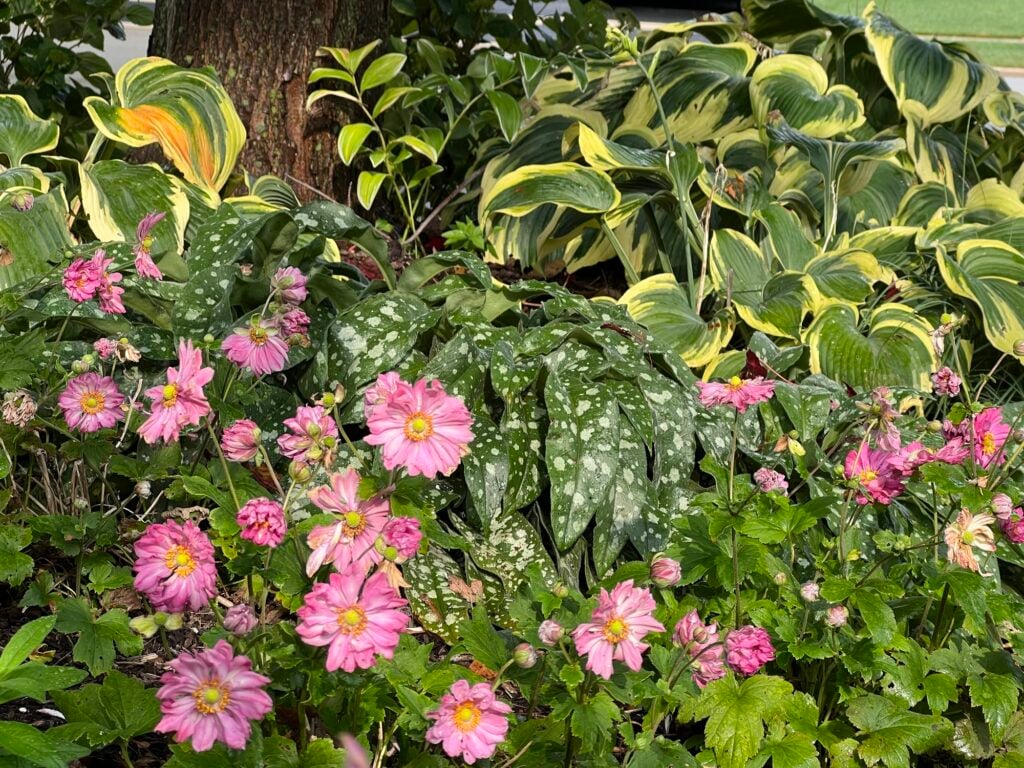
Choosing Japanese Anemones for a Smaller Garden
There’s no getting away from the growth habits of Japanese anemones. Some spread more vigorously than others, and that’s just the way it is. Some varieties are more compact in stature and spread more slowly, making them easier to incorporate into smaller garden spaces. I added two new varieties this fall and am excited to see them settle in and find their stride in the years to come. The autumn garden is my most favorite and Japanese anemone is a beloved member of the late season plant palette.
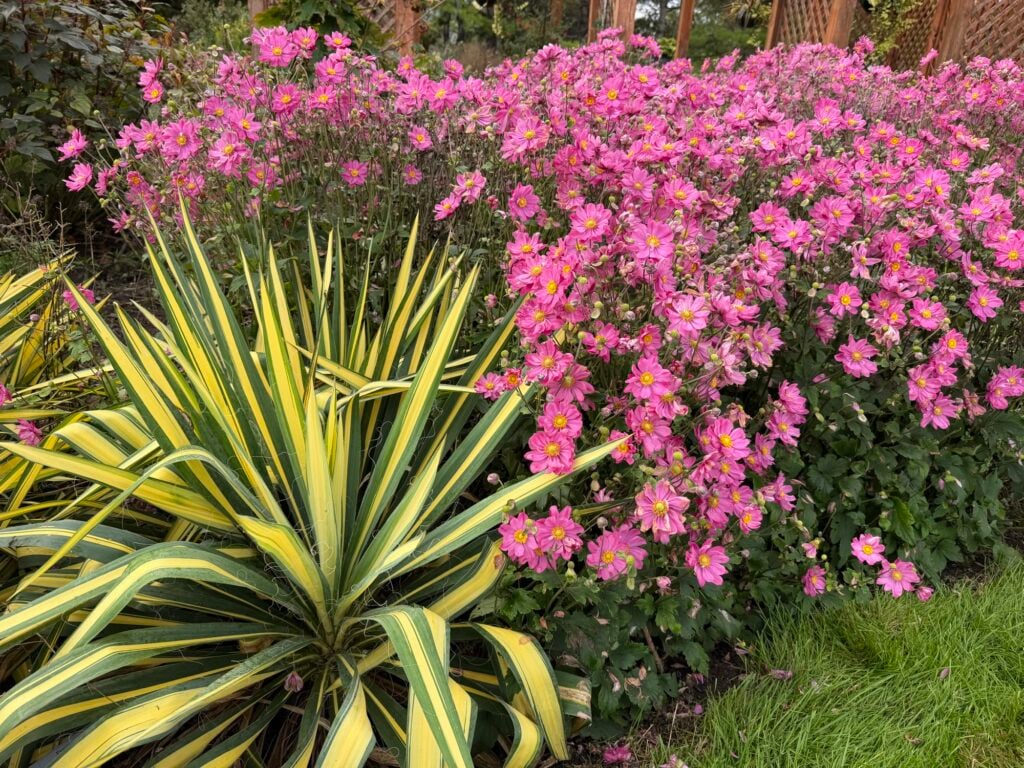
The new one from Proven Winners, Fall in Love Deeply, is similar to Fall in Love Sweetly but with a much deeper pink blossom. Be on the lookout for it in 2027. I received seven plants to trial this fall and added them to the back corner of the garden. Thanks to the river birch, it’s a very dry corner. But if it’s anything like its kin, it should be fine. I planted them around a very small Blue Kazoo spirea. Again late season interest. At maturity, they should be about 18″ tall and 2′-2.5′ wide. If all goes to plan, someday in the next several years, there will be pink blossoms dancing around a spirea with fabulous fall color as golden leaves from the birch float to the garden floor. How’s that for romantic imagery?
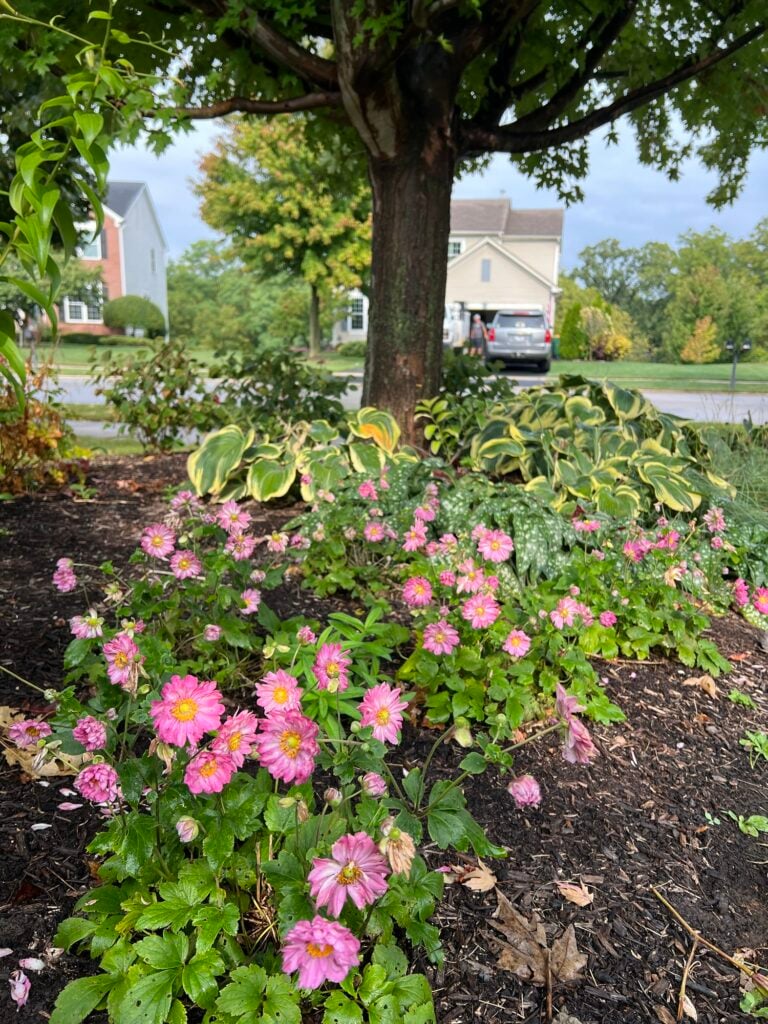
There’s something to be said for a plant that can take the brutal conditions of dry shade. While not in total shade, Fall in Love Sweetly, another Proven Winners variety, muscles on. Getting anything established here is a struggle, but once I get most things over the hump, they’re good. Such is the case with Fall in Love Sweetly. Her blossoms are a softer color than her Deeply sibling and I just noticed she’s begun spreading ever so slightly. But I’m glad as I would love for her to fill the exposed soil in this challenging space. Her growth habits are much like Deeply.
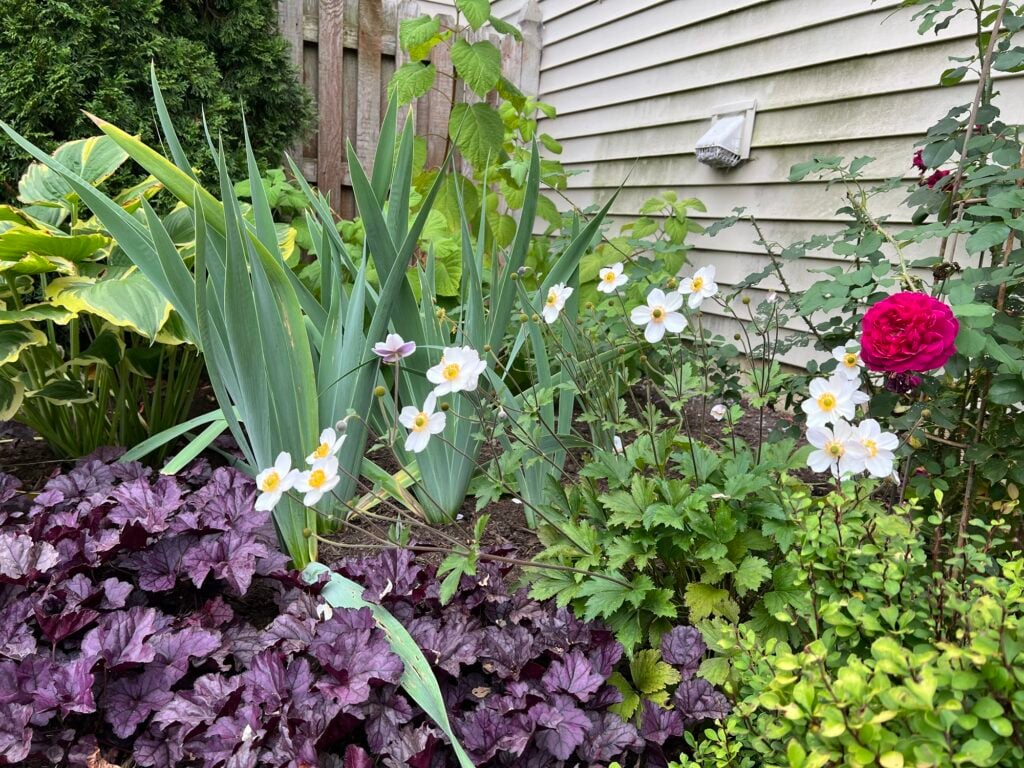
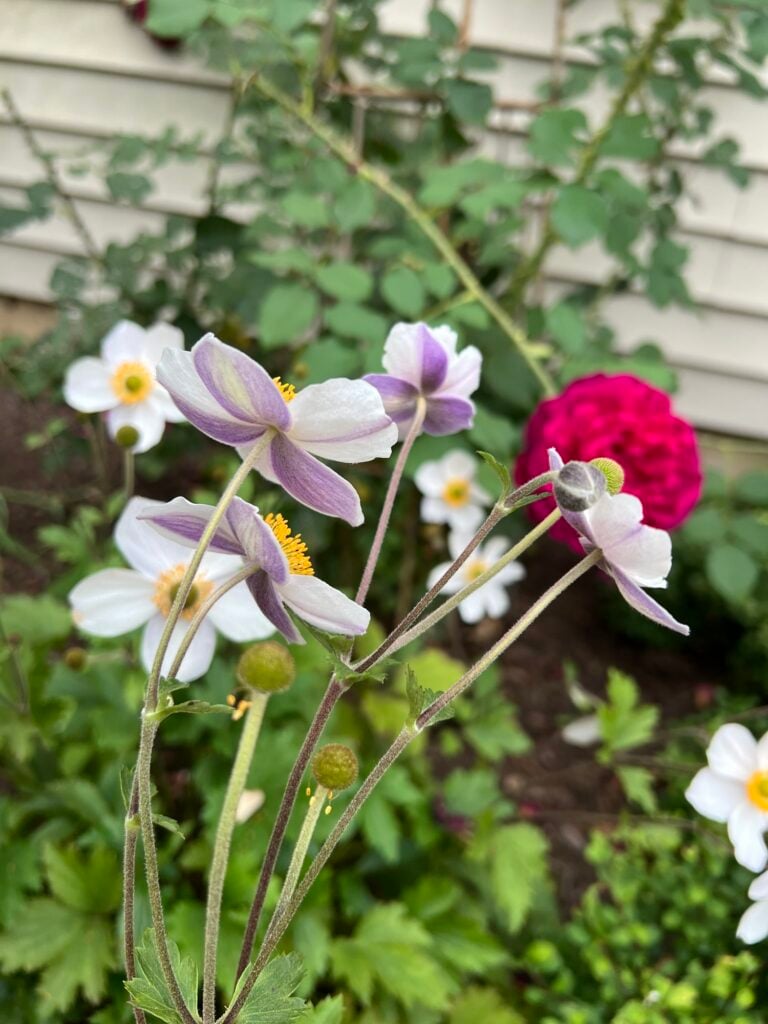
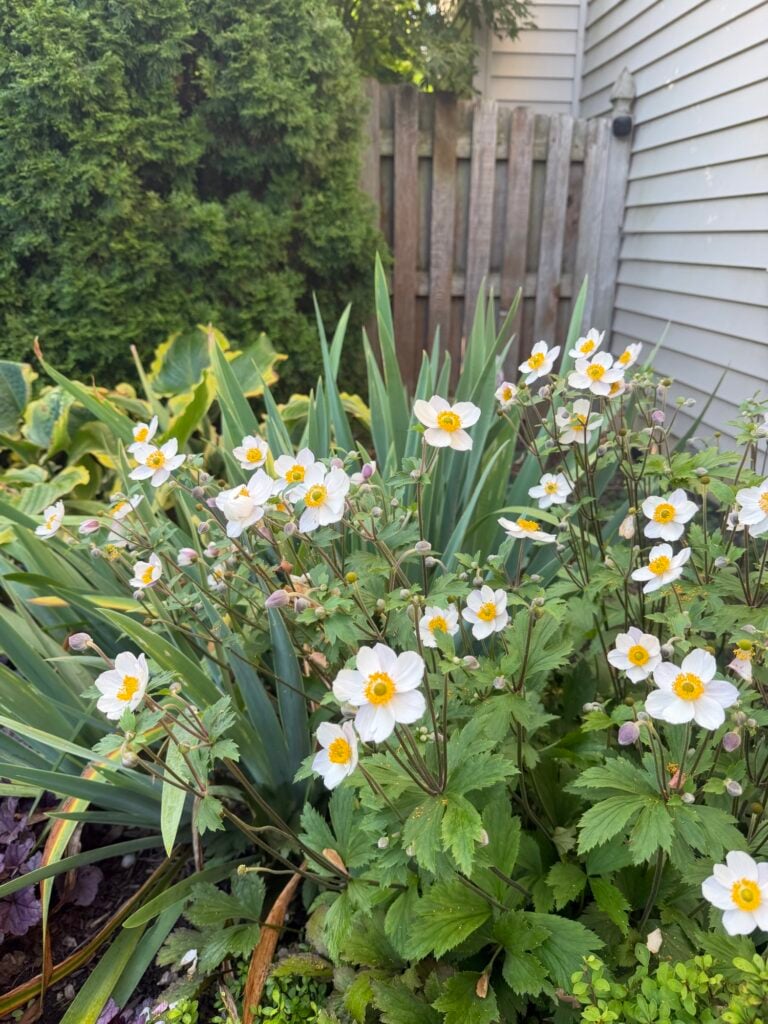
Elfin Swan Japanese anemone is a stunner paired with Dolce Wildberry heuchera. I’m a foliage first sort of gardener and that deep purple foliage on the heuchera is chef’s kiss with the reverse on the petals of the anemone. Elfin Swan is the smallest of the anemones in my garden, not that I have a lot, but at about one to two feet tall and about as wide, it’s perfect for small space gardens in need of late season color.
There was one more I added in early October and was sure I’d remember the name. I forgot it. But it was of a smaller stature and planted beneath the Jack Frost North Wind maple in the backyard. I’m kicking myself for buying just one. What was I thinking? Now that I think of it, I’m not sure what color it was. Pink? White?
Well, looks like I have another thing to look forward to in my late season garden…next year.
Gardening is a process of observing, learning and sometimes rethinking the plans we started with. And that’s part of what keeps it interesting.
What in your garden feels off or out of place? Are you considering an edit?
If so, do tell me in the comments!